Introduction:
Welcome to Building a Mathematical Mindset, my name is Maci Veillon and as an educator I find significance in the importance of nurturing student motivation and confidence for doing mathematics. My personal character and Christian Worldview values are aligned with focusing on my student's ability to make academic, social, and emotional progress in a welcoming environment. Being able to guide and set an example for students is truly what encouraged me to pursue my educational degree, and my personal determination and dedication to all students is something I feel grateful to have!
“Educators view teaching as a reflective, faith-guided journey that involves continually examining and improving their practice to better serve both God and their students” (Grand Canyon University of College of Education, n.d.).
My Mathematics Learning Experiences:
- I can remember learning multiplication facts in elementary school through rhymes and riddles, which made the process more engaging and helped me memorize the facts more easily. When I was learning in elementary school, I was a struggling learner, so this type of learning was highly beneficial to me.
- As a struggling learner, test that were timed often intimidated me and would get the best of me. I can remember feeling pressure to work quickly, often focusing on speed than understanding. My teacher would often encourage me to consider the riddles I learned and foster a positive mindset, which helped me believe that I was more than capable of accomplishing my goals. I now understand just how much that teacher has affected me and my understanding of being positive and having a growth mindset. “We should move away from focusing only on correct answers and instead value students’ reasoning, supporting their individual learning processes and mistakes to build deeper understanding of math concepts” (Nutall, 2017).
My Glows and Grows:
Glow: My ability to remember common rules and concepts for solving equations is a strength because my math teachers would implement catchy phrases and rhymes. It was always very easy to organize my work and accurately show my work. Another glow is having a growth mindset because I was always determined to achieve a goal and skill no matter what it took.
Grow: The most challenging part of math growing up was being able to explain my thinking and/or steps to get an answer. A major mathematical growth mindset grow is understanding that I can learn through my mistakes and see them as opportunities for improvement.
Mathematics Instruction:
"Current research says every student can succeed in math with a strong teacher who understands the content, uses effective teaching strategies, and supports each learner's individual needs" (Van De Walle et al., 2023). The biggest shift in mathematics and any subject is using strategies and research-based instruction and learning to promote deep understanding rather than memorization. To support a positive mathematical mindset, a teacher can intentionally focus on students’ thinking rather than just their answers by praising effort, strategies, and perseverance. For example, I could simply say “I like how you explained your thinking” or “That mistake helps us see a new way to solve the problem, “to normalize errors as part of learning. I often tell my students that sometimes we learn best from our own mistakes and can build on comprehending concepts better from our mistakes. By creating a classroom environment where mistakes are valued, students feel safe to take risks, build confidence, and develop a deeper understanding of mathematical concepts.
Math instruction should be a well thought and planned lesson to enhance student engagement and understanding, like the lesson that is tailored around the state standard.
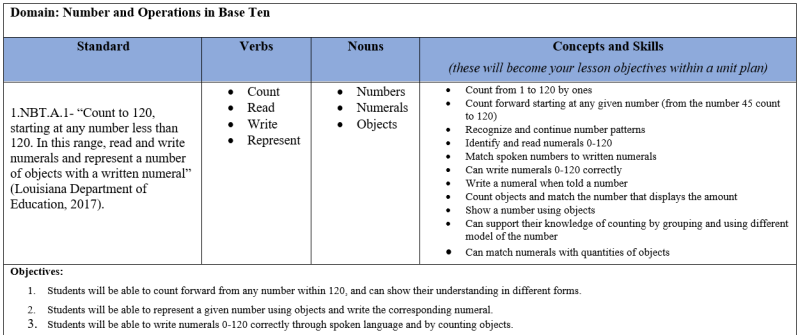
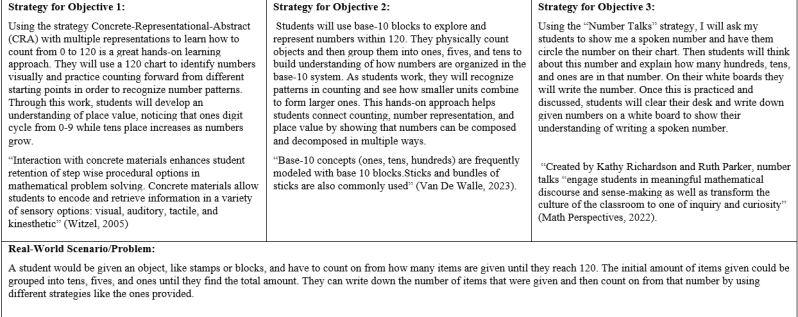
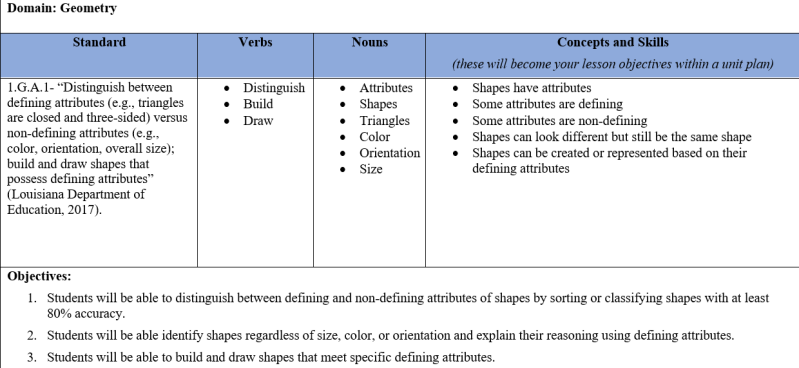
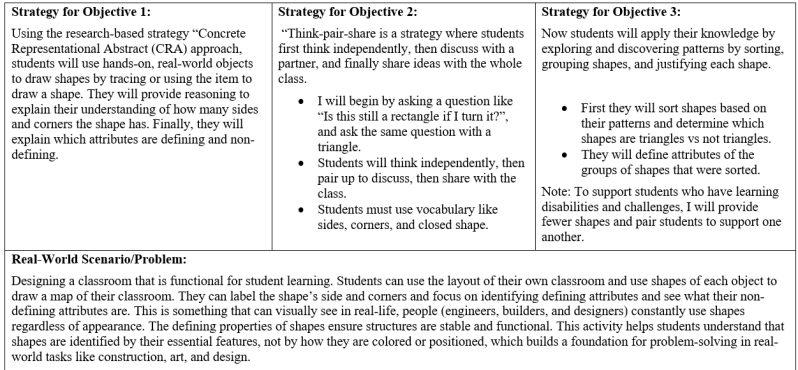

My Mathematics Teaching Philosophy:
As a mathematical teacher, I would believe the most important thing to provide in my classroom is respect, value, and capabilities. A meaningful philosophy to me is the belief that all students are capable of learning and growing in mathematics when given the right support, opportunities, and proper encouragement to promote growth. The biggest value in teaching math is the process of understanding, reasoning, and problem-solving rather than memorization. What strategies can I implement in my lesson to help engage, motivate, and boost students in their learning. I will aim to create a classroom where mistakes are seen as part of learning and students feel safe to take risks. To promote student progression, I must be a responsive and reflective teacher who uses a variety of instructional strategies based on student's individual needs. My ability to tailor and scaffold different learning needs will enhance students understanding of different skills. Cultivating mathematical mindset in myself and my students is something I will accomplish by modeling perseverance, encouraging effort over perfection, promoting positive math discussions, and helping students see that their abilities can grow with practice. By providing equitable practices and instruction, engaging tasks, and consistent intentional reflection, I will support all learners in developing confidence, competence, and a lasting appreciation for the core subject of mathematics!
And now, dear brothers and sisters, one final thing. Fix your thoughts on what is true, and honorable, and right, and pure, and lovely, and admirable. Think about things that are excellent and worthy of praise. Keep putting into practice all you learned and received from me—everything you heard from me and saw me doing. Then the God of peace will be with you. – Philippians 4:8-9 NLT
Strategies and Resources:

Strategies & Resources:
Strategy 1: Standards for Mathematical Practice
Strategy 2: Number Talk
https://www.loom.com/share/f9c22290567a4f38bcf23f3411a7fd6d
Strategy 3: At-Home Fraction Game for Family-Student Engagement
https://canva.link/ysj9ip4ywxox5us
Blog:
Create this category and leave it blank for now. You will have the opportunity to add posts later in the course. A minimum of two blog posts must be added for the Topic 8 assignment.
Post 1 (4/19/2026):
My biggest takeaway during lesson planning was learning about the CRA strategy because I have never heard of this research-based learning. CRA- Incorporate engagement with hands-on strategy that supports kinesthetic, conceptual, multiple representation, and flexible thinking. I love that this strategy is a hands-on learning approach and it supports a meaningful way to learn math concepts because one of the most important aspects to consider when lesson planning is how can I engage students and get them involved in their own learning.
“Number talk” was another new strategy that I learned about because I never heard of this type of learning. For this strategy, students get to learn together and gain different perspectives form one another, so I enjoyed using this strategy for my lesson.
Post 2 (May 3, 2026):
When researching the Standards for Mathematical Practice, I have learned multiple takeaways:
- Students should focus on understanding “why” math works, not just memorizing steps or procedures to just get by.
- Problem-solving skills are developed when students are encouraged to persevere through challenging tasks and explain their thinking.
- Mathematical discussions and collaboration help students build confidence and learn from different strategies.
- Real-world connections make math more meaningful and increase student engagement.
- Students benefit from using models, drawings, tools, and manipulatives to represent mathematical ideas visually.

Contact us
Maci Veillon
Kinder, La 70648
Get in touch
1-(337)-555-5555
buildingamathematicalmindeset@gmail.com
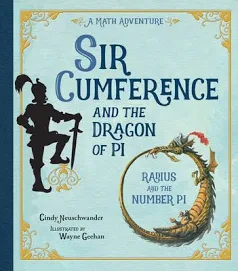
This book focuses on mathematical concepts in an engaging, accessible way. The main focus is circles, circumference, and the idea of pi in a fun narrative format that works well for a wide range of elementary and middle school learners.
1. Connect Math to Ideas- Families can look for circular objects in their home or community and discuss how circumference relates to real life. This helps students see that math exists in their own environment and cultures, not just in the classroom.
2. Use Storytelling and Discussion: After reading, families can talk about the characters' problem-solving strategies and ask questions about details in the story. This encourages mathematical reasoning, communication, and valuing multiple ways of thinking.
3. Incorporate Cultural and Community Connections: Families can explore how circles and measurements appear in cultural designs, art, architecture, or traditions. This helps students connect math to identity, culture, and real-world meaning.
Community Resources:
1. Local Grocery Store: Grocery stores provide real-world opportunities for students to practice math through pricing, budgeting, comparing quantities and qualities, measuring weight (produce), and understanding sales or discounts. Families and teachers can use shopping trips to explore estimation and addition/subtraction in meaningful ways. This connects to equity by making math accessible because it uses everyday experiences that all students and families can relate to, regardless of background or income, showing that math is part of daily life.
2. Local Banks: Banks can help students learn about money, budgeting, saving, and interest through simple, age-appropriate explanations or community outreach programs. Some even offer school partnerships or financial literacy workshops. These experiences connect math to real-life financial decision-making and help students see how math impacts their future, especially in communities where financial literacy opportunities may not be equally available at home.